
By Associate Professor Umair Ghori, Centre for Commercial Law & Governance, Faculty of Law, BOND UNIVERSITY
3 March 2026
Australia’s Critical Minerals and Rare Earths Sector: Overview and Outlook
What Are Critical Minerals and Why Are They “Critical”?
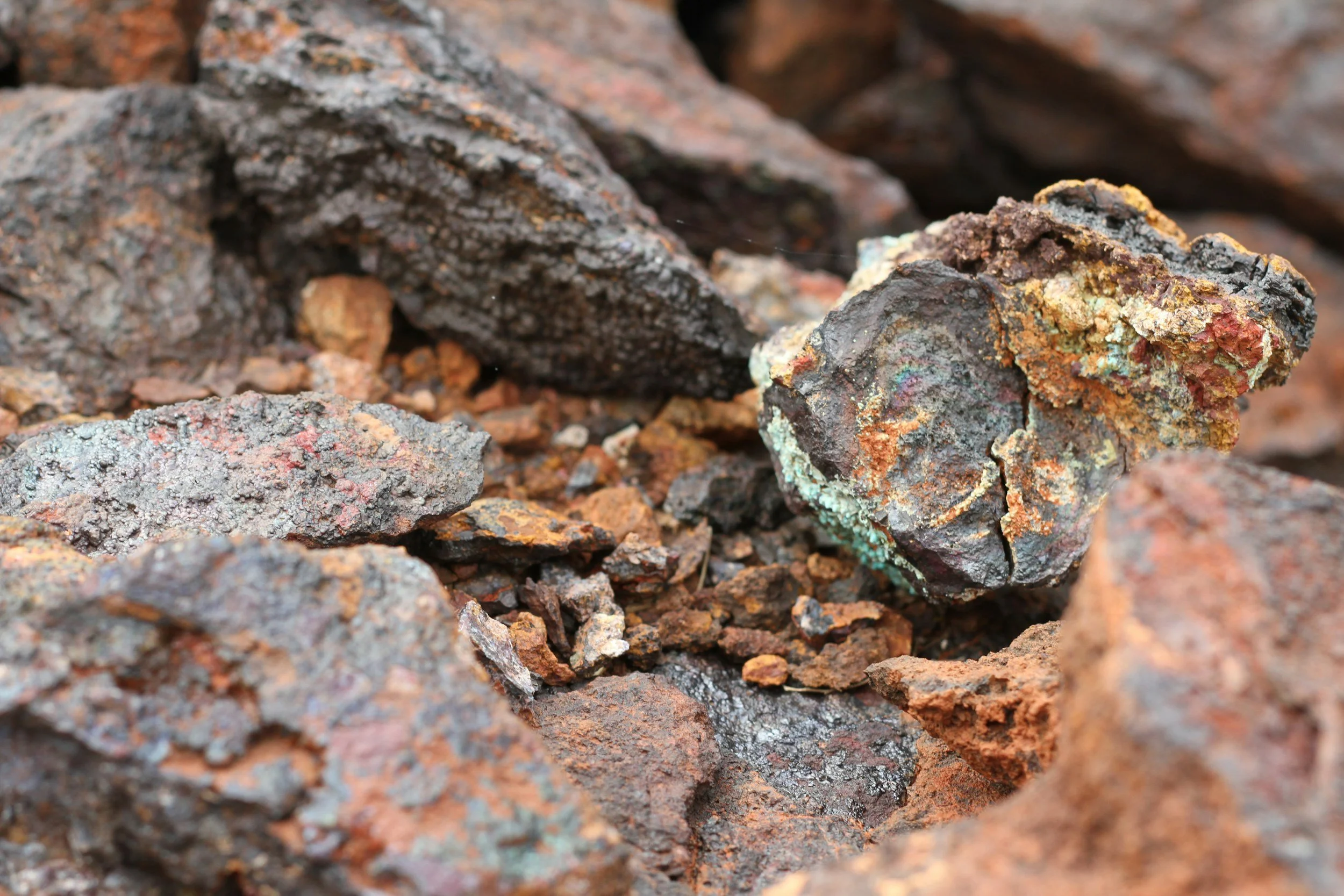
Critical minerals are natural elements and compounds that are essential to modern technologies and the functioning of advanced economies. However, they face a high risk of supply disruption due to geological scarcity, concentration of supply, or geopolitical considerations. Critical minerals play important roles in clean energy, digital technologies, defence systems, and advanced manufacturing. Their most notable roles are in the manufacturing of electric vehicle (EV) batteries, home storage batteries, wind turbines, semiconductors, and permanent magnets for motors. Well known examples include lithium, cobalt, nickel, graphite, rare earth elements (REEs), and others identified by governments such as the United States, European Union, and Australia itself.
According to the International Energy Agency (IEA) Global Critical Minerals Outlook 2024, global demand for minerals essential to clean energy technologies is projected to double by 2030 under the Stated Policies Scenario, and to rise nearly three-fold by 2030 and up to four-fold by 2040 under a Net Zero Emissions by 2050 scenario, reaching nearly 40 million tonnes of minerals globally. These projections underscore the strategic importance and potential supply-chain vulnerability of critical minerals.
Australia maintains its own Critical Minerals List which includes several commodities based on geological potential and global technology demand. These comprise lithium, cobalt, manganese, vanadium, tungsten, high-purity alumina, rare earths, and more.
Critical minerals are deemed critical not only for economic growth but also for national security and technological sovereignty. Supply disruption risks, given the concentration of processing in a limited number of countries, have elevated them to strategic policy status in Australia, the United States, Japan, the EU, and others.
What Are “Rare Earths” and Their Relationship to Critical Minerals
Rare earth elements (REEs) form a specific subset of critical minerals, comprising 17 metallic elements: the 15 lanthanides plus yttrium and scandium. Despite their name, these elements are not necessarily rare, but they are economically “rare” because of their low concentrations, difficulty in extraction and separation for industrial use.
Their classification as “critical” arises from their unique properties that are difficult to substitute and indispensable for high-tech applications like permanent magnets in EV motors and turbines, battery electric storage solutions, aerospace systems, medical devices, semiconductors lithography, and advanced electronics.
REEs are therefore included within broader critical mineral definitions used by many governments, including Australia’s own list. Their production and processing are critical for decarbonisation technologies and defence supply chains, making them central to geopolitics and trade policy.
Because rare earths are dispersed and tightly bound with other elements, mining and chemical separation require costly and polluting processing that historically has been dominated by China. Over 90% of global processing has occurred in China, even where ore is mined elsewhere, creating a major supply chain bottleneck.
Australia’s Critical Minerals and Rare Earths Potential
Australia is among the world’s most resource-rich countries for critical minerals, with significant reserves of lithium, cobalt, manganese ore, rare earths, and other strategic materials. According to the latest Geoscience Australia data, in 2023–24:
Australia remained the world’s largest producer of lithium, contributing around 49% of global production.
It ranked among the top five producers for cobalt (2%), manganese ore (9%), rare earths (8%), rutile (35%), tantalum (6%) and zircon (24%).
Australia’s demonstrated resources have increased in many categories, including rare earths, which saw inventory growth of about 10%.
Most mineral deposits and mining operations are located in Western Australia. Arafura Rare Earths, Iluka Resources, and Lynas Corporation are among major players in the domestic and global supply chain.
While Australia is a major supplier of raw critical minerals, processing capacity especially for rare earths remains relatively limited domestically, with much ore historically shipped overseas for refinement. However, new processing infrastructure is rapidly emerging, including Australia’s first rare earths processing facilities, signifying a potential shift up the value chain.
Proven Reserves and Investment in the Sector
Australia’s endowment places it among the world’s top jurisdictions for critical minerals and rare earths. Commentators term Australia as a “periodic table that lights up like a Christmas” tree with one of the broadest and riches concentrations of mineral resources on Earth.
In addition to reserve figures, Australia’s broader critical minerals portfolio includes world-leading lithium deposits (around 6.3 million tonnes of identified reserves), substantial cobalt resources, and significant manganese ore and other strategic minerals.
Investment in exploration and development remains robust. Recent reports show that total corporate M&A deal activity in Australia’s critical minerals sector reached its highest level in six years in 2025, with total deal value recovering to around AUD 25 billion, driven by demand for battery metals and critical mineral assets.
On the policy front, the Australian government has significantly increased direct and indirect support for the sector:
A Critical Minerals Strategic Reserve of A$1.2 billion is being established to secure supply and support international partnerships, including with major trading partners.
Under the United States–Australia framework agreement, both countries have committed to invest at least US $1 billion in priority critical minerals and rare earth projects over the coming months.
Such strategic investments reflect geopolitical imperatives to diversify away from concentrated supply chains and to attract private capital into mining and processing infrastructure.
Environmental Impacts of Mining Critical Minerals and Rare Earths
Mining critical minerals and rare earths carries significant environmental implications. The extraction and processing of rare earth ores typically generate large volumes of waste that contains heavy metals or radioactive by-products. In conventional rare earth extraction, every tonne of rare earth produced may generate around 2,000 tonnes of waste, including toxic residues that require careful management and disposal to avoid soil and water contamination.
Environmental challenges associated with rare earth and critical minerals mining include:
Water use and contamination: Processing can consume large volumes of water and produce acidic or chemical-laden effluent that must be treated or contained to avoid impacts on local water tables.
Radioactive and toxic waste: Rare earth ores can contain small quantities of radioactive elements, necessitating stringent handling and waste storage solutions.
Habitat disruption and biodiversity loss: Mining operations require land clearing, infrastructure development, and transport networks that can fragment habitats and reduce biodiversity at mine sites and surrounding regions.
Australia aims to manage these impacts through high environmental standards, modern processing techniques, and a growing emphasis on sustainable mining practices. However, balancing rapid expansion of the sector with environmental stewardship remains a key policy and industrial challenge.
Future Outlook: US Investments and Offtake Agreements
The future of Australia’s critical minerals and rare earths sector is shaped by global demand, strategic alliances, and policy-led investment. The United States–Australia Critical Minerals Framework signed in 2025 aims to build a secure supply chain for critical minerals and rare earths by combining resources, investment capital, and industrial capacity.
In terms of commercial arrangements, offtake agreements (long-term contracts by which purchasers commit to buying specified quantities of minerals) are expected to play an increasingly prominent role. These agreements provide revenue certainty to producers and security of supply to downstream manufacturers and defence sectors, encouraging investment into processing facilities and refining capacity. Australia’s strategic reserve and allied partnerships may include such offtake mechanisms and stockpiling arrangements, supporting both sovereign resilience and market predictability.
Australia’s position as a major critical mineral producer with expanding processing capabilities, together with strong institutional support and international demand, suggests continued growth in production, investment, and global market integration over the next decade. However, the sector’s development will require careful mapping of environmental standards, infrastructure enhancement, and supportive regulatory frameworks to translate geological potential into sustained industrial capacity and geopolitical leverage.