
ARTICLE
Australia’s Trade Agreements
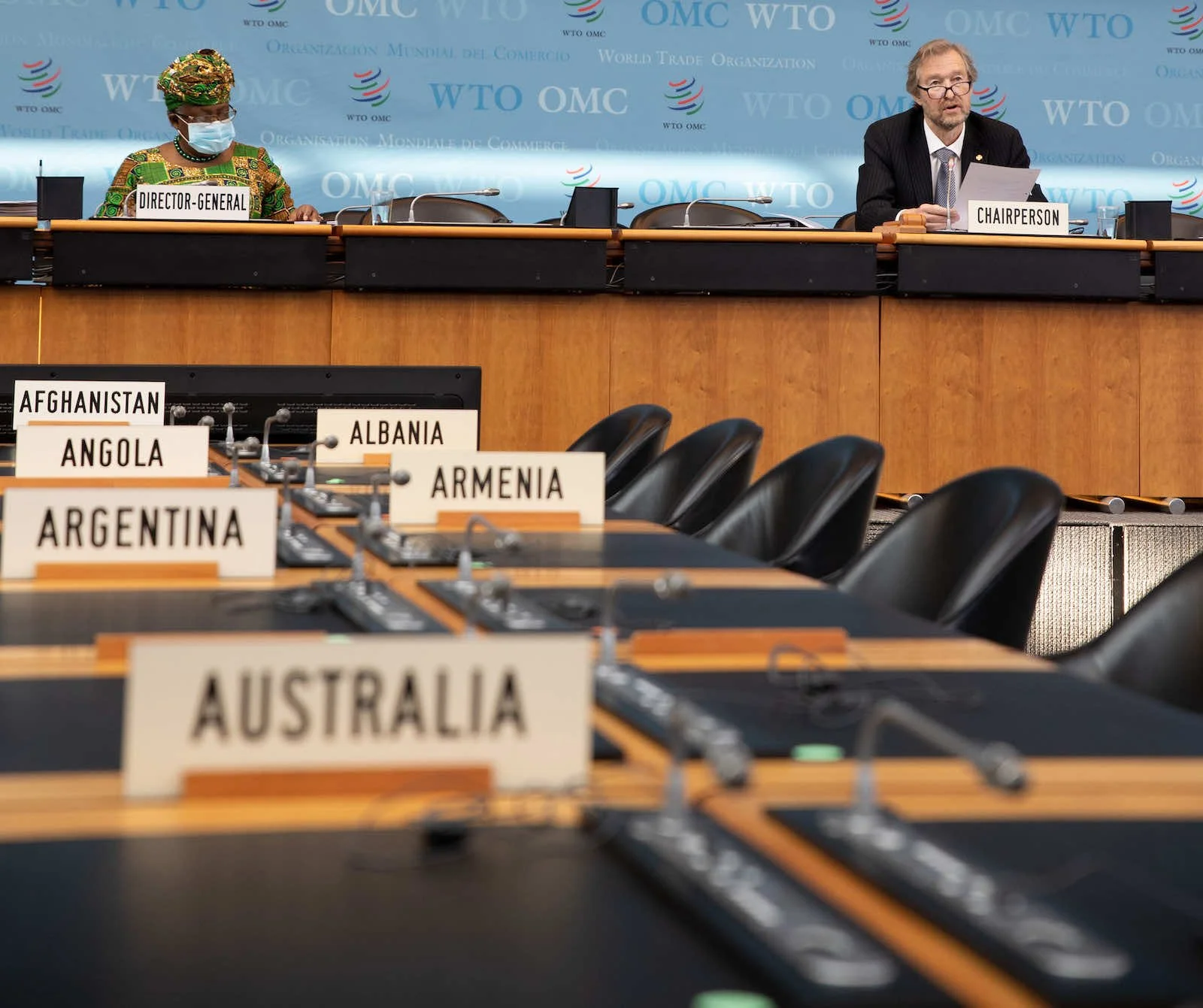
Trade is an important part of Australia’s economy and impacts the daily lives of all Australians. Global trade is supported by a series of rules and principles that countries agree to abide by to help trade flow. These rules and principles are set down in trade agreements. The World Trade Organisation Agreements provides the founding agreement for all other trade agreements. Countries have negotiated additional rules and made new trade commitments in other trade agreements. This page describes the different types of trade agreements Australia has signed on to, what they commit Australia to, and why Australia has signed up to them. The page focuses on the World Trade Organisation, and Free Trade Agreements. Details on the ASEAN-Australia-New Zealand FTA are below with more forthcoming.
Australia’s Free Trade Agreements
-
ASEAN-Australia-New Zealand FTA
-
Australia-United States FTA
-
Australia New Zealand Closer Economic Relations
1. What is the World Trade Organisation?
The World Trade Organisation (WTO) is an international organisation made up of 166 member economies. It is a forum where members can discuss trade and trade-related policies and problems, negotiate trade agreements, and resolve trade disputes. The primary purpose of the WTO is to open trade for the benefit of all by creating and maintaining a set of rules that reduce barriers to trade. The WTO is run by the representatives of its member countries. While the WTO has a Secretariate headed by a Director General, these officials support the work of WTO members. The actual rules and processes are agreed upon and enforced by the members themselves.
History of the WTO
The WTO was founded in 1995 but its predecessor organisation – the General Agreement on Tariffs and Trade (GATT) dates back to the end of the Second World War. The GATT itself grew out of discussions for an International Trade Organisation (ITO) that was to be the third pillar of the Bretton Woods Institutions, along with the International Monetary Fund and the World Bank. The purpose of the Bretton Woods Institutions was to boost economic recovery following the war and promote international economic cooperation. Trade was important in this because spiralling tariff increases during the 1930s had contributed to the economic depression that, in turn, contributed to the outbreak of war. Torn between those in the US Congress who believed the ITO would not do enough and those that thought it would do too much, the plan for an international organisation to manage trade problems was eventually abandoned. While the ITO did not proceed, negotiations to reduce tariffs, originally envisioned as part of the ITO, did survive and became the GATT. There were 23 member states at GATT’s inception. It wasn’t an organisation but a mutually agreed set of commitments to reduce tariffs.
The principal obligations GATT members agreed to when negotiating tariff reductions were non-discrimination, or ‘most-favoured-nation’ and national treatment.
· Non-discrimination or ‘Most-favoured-nation’– If a GATT member removes or lowers a tariff for one member, they must offer the same to all members.
· National Treatment –GATT members must treat goods imported from other GATT members (and later services) the same as domestically produced goods.
These core obligations carried over to the WTO in 1995 when the organisation was created.
Between 1948 and 1995, eight rounds of GATT multilateral trade negotiations were held. The GATT was seen as such a success that by the Tokyo Round in 1973 the number of participating economies had increased to 102. The final round of the GATT was the Uruguay Round held between 1986 and 1994. By the Uruguay Round, the issues negotiated in the GATT had expanded well beyond tariffs on manufactured products to include trade topics as diverse as services, intellectual property, agriculture and textiles. The Uruguay Round also revised and updated many of GATT’s original provisions. By the end of the negotiations, a new set of rules, including an updated dispute settlement process, had been agreed upon and the WTO was born.
Functions of the WTO
The new WTO created a permanent Secretariat that supports day-to-day implementation of the WTO agreements. The Secretariate is based in Geneva where most WTO members are represented by permanent ambassadors. Around once every two years, ministers from WTO members come together to decide on forward work plans, conclude new agreements and resolve larger problems at the WTO Ministerial Conference.
The key functions of the WTO are to:
1. negotiate new, and update existing, agreements to improve trade between WTO members
2. increase understanding of each WTO members’ trade measures and provide opportunities to discuss them through the Trade Policy Review Mechanism and WTO Committees
3. resolve trade disputes and,
4. support developing and least developed countries to maximise the benefits of trade for their economies
Negotiations
Negotiations within the WTO (and before it the GATT) were conducted in the past in what was called a multilateral trade negotiation or Trade Round. Each round aimed to update existing agreements and improve access to markets through new agreements. The rounds involved multiple representatives from each GATT/WTO member coming together, often over years, with proposals and counterproposals for new and updated provisions until all could agree on a single package of new provisions and market access obligations.
The Trade Rounds held under the GATT and WTO, and the primary subjects they covered were:
1947 – Geneva: Tariffs
1949 – Annecy: Tariffs
1951 – Torquay: Tariffs
1956 – Geneva: Tariffs
1960-1961 – Dillon Round: Tariffs
1964-1967 – Kennedy Round: Tariffs and anti-dumping measures
1973-1979 – Tokyo Round: Tariffs, non-tariff measures, Civil Aircraft, bovine meat, dairy and government procurement
1986-1994 – Uruguay Round: Tariffs, non-tariff measures, rules, services, intellectual property, textiles, agriculture, anti-dumping, safeguards, least developed countries and the creation of WTO
2001-incomplete – Doha Round: Tariffs, non-tariff measures, agriculture, labour standards, environment, competition, investment, transparency, patents, least developed countries, e-commerce, services, dispute settlement, country groupings and special and differential treatment.
The WTO has only held one round since it was established in 1995 which was the Doha Round. The Doha Round started in November 2001 and effectively ended without resolution at the Nairobi Ministerial Conference in 2015. It was the largest round held to date with 159 participants.
The Doha Round failed for a range of reasons including deep divisions between developing and developed members and the large number of parties, with diverse interests, making consensus more difficult to achieve. Prior trade rounds had dealt with issues that were relatively easier to resolve which left more complex and difficult issues for the Doha Round. The nature and environment of world trade too had changed drastically from the start of the round to when it was concluded. Developing countries like India, Brazil and China were relatively minor players in international trade at the launch of the Doha Round, but were large and important trading countries by 2015 when negotiations broke down. Agriculture remained a complex and contentious issue for both developing and developed countries. Traditional trade issues were also increasingly overshadowed by digital trade, services trade and investment issues. Fundamentally, the issues that were the focus of negotiations at the start of the decade seemed less relevant by the end of the decade.
In place of big rounds, negotiations in the WTO today progress through the biannual Ministerial Conference (MC) as well as through ‘plurilateral’ negotiations. Recent MCs have been able to conclude negotiations on some important agreements such as the Trade Facilitation Agreement concluded at MC9 in Bali, Indonesia in 2013, and the Fisheries Agreement concluded at MC12 in Geneva in 2022.
Some WTO members have also progressed ‘Joint Initiative’ or ‘plurilateral’ negotiations on electronic commerce, investment facilitation for development, micro-, small and medium-sized enterprises (MSMEs) and services domestic regulation. These are not ‘multilateral’ negotiations where a consensus of all WTO members is required to conclude. Rather, they are open to all WTO members to join but can be concluded through the agreement of those members who decide to join the negotiations. This avoids the ‘consensus’ rule in WTO decision making that requires every member to agree (or at least not object) to conclude an agreement. In July 2024, 82 WTO members agreed to the text of the Joint Statement Initiative on Electronic Commerce – probably the most significant multilateral outcome since the conclusion of the Uruguay Round.
WTO Trade Policy Review Mechanism and Committee System
The WTO committee system ensures there is regular discussion about domestic trade polices to increase policy transparency. Members undergo a regular policy review process in which the member being reviewed provides a report on their own trade policies and programs alongside a report drafted by the WTO secretariat. Both reports are presented to the relevant WTO committee and can be discussed by all interested members. This promotes transparency and, in theory, policy learning.
Dispute Settlement
A key strength of the WTO has been its dispute settlement system. The ability to levy financial penalties against members who are found to breach their WTO commitments has been a key strength in its effectiveness.
Dispute settlement in the WTO begins with consultations between the disputing parties. If consultations fail to resolve an issue, the matter can be taken to a WTO Dispute Panel for adjudication. Once the panel rules on an issue, if one or more of the parties to the dispute challenges the finding (which is usual) the dispute is sent to the Appellate Body. This is a group of seven people who are tasked with reviewing the legality of the dispute reports made by the member or members. If the Appellate Body finds a member to be in breach of their trade agreement, they will be required to bring the offending measures in line with their trade obligations. If the member does not agree to do so, the members that lodged the initial complaint are permitted to impose trade restrictions either until the measure is removed or in compensation for the damage caused by the measure. This dispute settlement process is crucial in supporting an effective rules-based system for international trade.
Current headwinds.
As at January 2026, the WTO is facing major challenges. On the trade negotiation front, minor progress in some areas has been made at Ministerial Conferences. But no major trade round has been successfully concluded since the Uruguay Round in 1994. This means most trade rules are dated, and new trade areas lack any WTO rules.
The United States’ decision to withhold consensus on the appointment of new Appellate Body members has disabled the full functioning of the WTO Dispute Settlement System. While an interim body was established by some WTO members to play the role of the Appellate Body (the Multi-Party Interim Appeal Arbitration Arrangement (MPIA)), not all WTO members have signed on.
National security concerns are leading many countries to introduce new trade barriers that are contrary to their WTO commitments. Climate change measures are also, in many cases, inconsistent with commitments to remove obstacles to trade. Geopolitical competition between the United States and China is the root cause of many of these measures, with major spill overs for other economies.
The return of President Trump to the White House, and his use of trade policy to try and achieve national security and domestic manufacturing objectives, is further eroding the rules-based trade system.
For more information check out the WTO website (World Trade Organization - Home page - Global trade) and the trade section of the Australian Department of Foreign Affairs and Trade website (World Trade Organization | Australian Government Department of Foreign Affairs and Trade).
2. What are FTAs?
Free trade agreements or FTAs are treaties signed between two or more economies. (The term ‘economies’ is used instead of countries or states because some FTA signatories are not formally recognised as countries or states eg. Hong Kong.)
FTAs have two central aims with the first ensuring that countries reduce or fully eliminate the barriers to trade and investment between each other. Secondly, FTAs aim to create greater opportunities for these countries to increase their level of trade and improve business ties between countries.
A barrier to trade is a restriction or obstacle which prevents or is a hindrance to the exchange of goods and services between countries. FTAs help governments reduce or remove these barriers by enabling the reciprocal reduction or removal of barriers. That is, economies that signup to an FTA do so because the other FTA partner agrees to remove trade barriers that stop or hinder exports of their goods or services to that economy. The process of negotiating a package of outcomes means FTA partners both give and take to land on a package that has some benefits for all parties but also requires some concessions. When economies make FTA commitments, they also give businesses greater confidence as they faceless barriers to trade when exporting their good or service to a country plus provide greater certainty that the government will not change the conditions on which their trade relies.
Australia currently has eighteen FTAs with thirty different countries that haveentered into force. The section will list all the different FTA’s Australia hasentered into force. These are: Australia-NewZealand (ANZCERTA or CER),Singapore-Australia (SAFTA), Australia-Untied States(AUSFTA),Thailand-Australia (TAFTA), Australia-Chile (ACI-FTA),ASEAN-Australia-New Zealand (AANZFTA), Malaysia-Australia (MAFTA),Korea-Australia (KAFTA), Japan-Australia (JAEPA), China-Australia (ChAFTA),Comprehensive and Progressive Agreement for Trans-Pacific Pacific Partnership(CPTPP), Australia-Hong Kong (A-HKFTA), Peru-Australia (PAFTA), Indonesia-Australia Comprehensive Economic Partnership Agreement (IA-CEPA), Pacific Agreement on Closer Economic Relations (PACER) Plus, Regional ComprehensiveEconomic Partnership Agreement (RCEP), Australia-India Economic Cooperation and Trade Agreement (ECTA) and Australia-Untied Kingdom Free Trade Agreement (An-UKFTA). FTAs can be structured in different ways.
This section will explain the different types of FTAs. The first type of FTA, which is very common, is a bilateral agreement between two economies such as Australia and New Zealand. Another is a regional FTA which is signed between multiple countries generally located in the same region. An example of this is the CPTPP whose members are located around the Pacific Ocean.
These regional agreements can include economies from outside the region. An example is the UK which is in the process of joining the CPTPP. The last example of a different form of FTA is a Plurilateral agreement which is a negotiation between economies generally regarding a certain topic.Recently Australia joined a Plurilateral agreement on E-Commerce. The key type of trade agreement is a multilateral agreement. These generally refer to agreements negotiated under the framework of the World TradeOrganisation and include currently 165 member economies. Nearly all FTAs incorporate commitments included in WTO agreements but go beyond those commitments. So the WTO is like the foundation on which most FTAs are built.
You might ask why don’t economies just negotiate trade agreements in the WTO rather than use FTAs, regional and plurilateral agreements? The WTO was created in order to produce an international organisation that could help set guidelines and standards in order to regulate trade between countries. Over time, the WTO has faced challenges, such as a lack of meaningful reform to its guidelines and regulations due to continued disagreement between member states. The WTO‘ consensus’ requirement – that everyone has to agree before anything can be agreed has meant trade negotiations are difficult to conclude and generally very slow.
In contrast, FTAs can be more ambitious and specific in their scope compared to negotiations in the WTO. Generally, they can also be concluded more quickly. Australia has used both FTAs and worked in the WTO to promote its trade interests. Equally, were the Australian Government to unfairly block or restrict imports or exports, our relationships with international partners can suffer. Using trade as a weapon can hurt businesses and erode trust between countries. The environmental impact of international trade has also attracted a lot of attention as a possible negative consequence ofAustralia’s reliance on international trade and investment.
This section will outline the most recent FTAs that Australia has concluded or is in the process of negotiating. India has become one of Australia’s fastest growing trade partners partly due to the trade agreement Australia negotiated with India – the ECTA – and which entered into force on 29 December2022. There are on going negotiations to build upon this original treaty to establish a Comprehensive Economic CooperationAgreement that would further increase the level of trade and cooperation between the two countries. The Australia-United Kingdom FTA (A-UKFTA) entered into force on 31 May 2023. Negotiations for the Australia-United Arab Emirates Comprehensive Economic Partnership Agreement concluded on 17 September 2024.This trade agreement will help to diversify Australia’s trade partners and help expand trade with countries in the Middle East.
Finally, negotiations with the European Union (EU) to create an FTA are ongoing. This would be a significant trade agreement for Australia as the EU is one of the largest trade blocks in the world and home to many trade and investment opportunities. There is no current timeline for concluding this FTA. FTAs have allowed Australian businesses to increase their trade with many different economies. Australia will continue to be proactive in this space with more trade deals currently being negotiated.