
ARTICLE
ASEAN
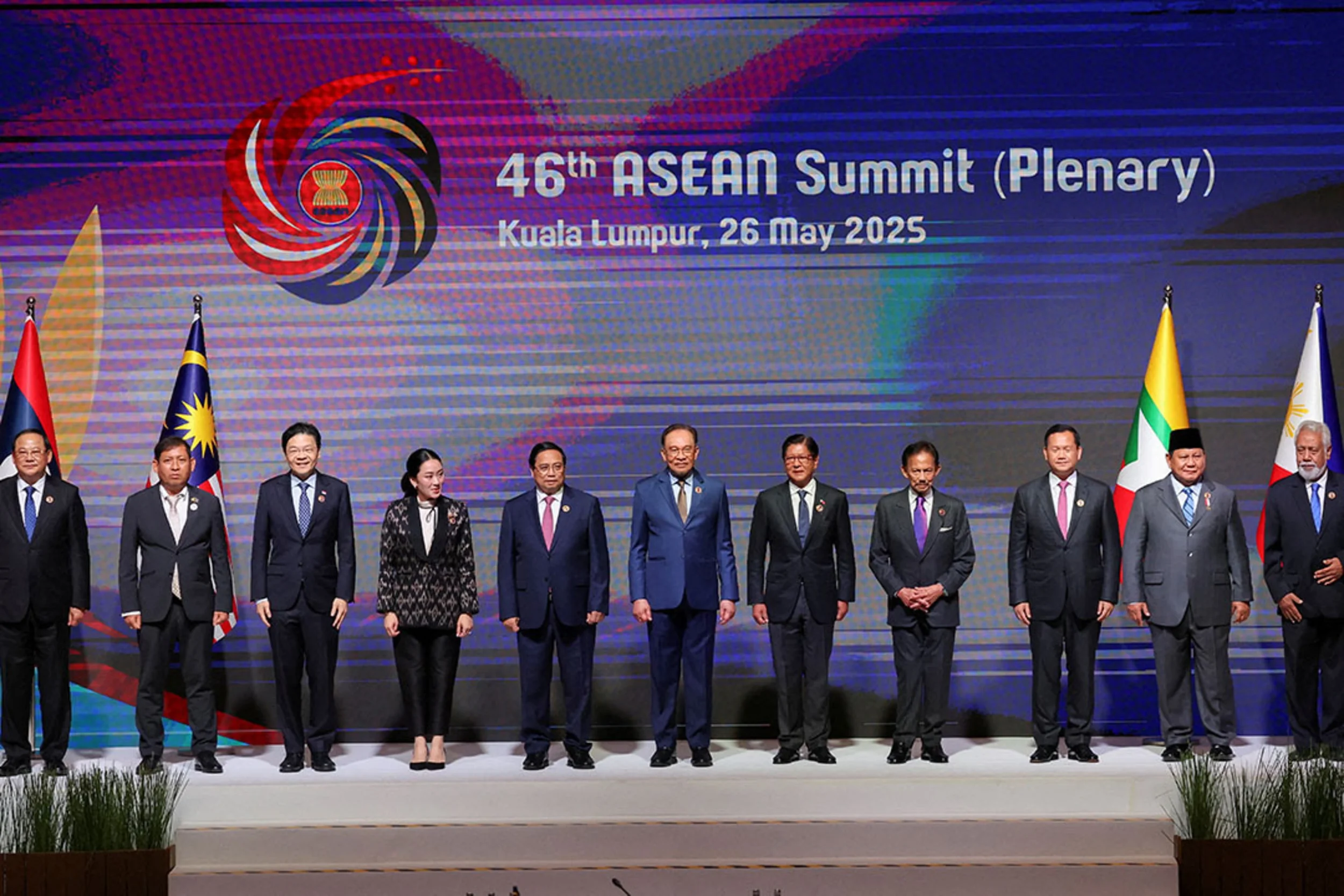
Australia’s relationship with the Association of Southeast Asian Nations (ASEAN) is one of its most dynamic economic partnerships. In 2024, ASEAN was Australia’s second-largest two-way trading partner after China, with total trade in goods and services valued at A$195 billion, accounting for around 15 per cent of Australia’s global trade. Australia’s exports to ASEAN were A$84.6 billion and imports were A$110.4 billion, resulting in a modest trade deficit. The total stock of two-way investment exceeded A$280 billion, reflecting strong capital links across sectors such as energy, infrastructure, finance, and education.
Agreements and Frameworks
The primary framework governing trade between Australia and ASEAN is the ASEAN-Australia-New Zealand Free Trade Area (AANZFTA). This regional agreement, signed in 2009 and in force across ASEAN, Australia and New Zealand, covers tariff reduction, rules of origin, services liberalisation, investment protections, and dispute settlement. An AANZFTA Upgrade, effective from April 2025, modernises the agreement with new provisions on digital trade, micro and small enterprises, government procurement, and sustainable development, while strengthening services, investment, and supply-chain cooperation. These updates aim to enhance market access, reduce red tape, and align rules with the digital economy.
Australia and ASEAN are also members of the Regional Comprehensive Economic Partnership (RCEP), which came into effect in 2022. RCEP creates the world’s largest free trade area, harmonising rules of origin and lowering tariffs across 15 Indo-Pacific economies
Australia also maintains bilateral FTAs with individual ASEAN members such as Indonesia, Malaysia, Singapore, and Thailand, which complement and strengthen regional commitments. Of particular note is the Indonesia–Australia Comprehensive Economic Partnership Agreement (IA-CEPA), which came into effect in 2020. IA-CEPA eliminates tariffs on nearly all goods between the two countries, allows Australian firms to hold majority stakes in certain sectors in Indonesia (transport, telecommunications, energy, health), expands vocational training visa quotas, and grants protections against expropriation and discrimination.
Trade
Two-way trade between Australia and ASEAN reached A$195 billion in 2024. ASEAN collectively accounted for 15.5 per cent of Australia’s total trade, surpassing Japan and the United States in value. Australia’s exports were A$84.6 billion, while imports reached A$110.4 billion, placing Australia in a moderate trade deficit with the bloc.
Exports
Goods dominate Australia’s exports to ASEAN, led by minerals and fuels such as natural gas (A$10 billion), coal (A$7.9 billion), and crude petroleum (A$7.2 billion). ASEAN economies rely on these commodities to power their growing industries. Other significant exports include gold (A$5.1 billion), iron ore (A$2.7 billion), and wheat (A$3.7 billion). Agricultural exports have expanded in recent years due to rising regional food demand, though they remain smaller than resource exports. In services, education-related travel and tourism are key exports. ASEAN students studying in Australia contributed A$9.5 billion in 2024, and inbound tourism generated A$4.2 billion, reflecting Australia’s strengths in education and lifestyle industries.
Imports
ASEAN supplies Australia with a wide range of manufactured goods and services. In 2024, imports from ASEAN were A$110.4 billion, with refined petroleum (A$19.4 billion) as the largest single category, primarily from Singapore. Other major imports include motor vehicles (A$10.5 billion), mostly from Thailand, and electronics and telecommunications equipment (A$5.3 billion) from Malaysia and Vietnam. Travel services were the largest services import at A$20.9 billion, driven by Australian tourism to Southeast Asia. ASEAN has become a crucial supplier of intermediate goods, manufactured products, and services, highlighting its role in Australia’s supply chains and consumer markets.
The trade relationship is complementary: Australia exports energy, resources, and education services, while ASEAN provides manufactured goods, fuel, and tourism. ASEAN is now Australia’s second-largest trade partner, and Australia ranks among ASEAN’s top ten trading partners, underscoring mutual economic importance and growing interdependence.
Investment
Two-way investment between Australia and ASEAN exceeded A$280 billion in 2024, reflecting strong capital flows in both directions.
Inbound investment
ASEAN’s investment in Australia totaled A$182 billion, including about A$64 billion in direct investment. Singapore is the dominant investor, accounting for over 80 per cent of ASEAN’s total investment stock. Its companies and sovereign funds hold significant stakes in Australian real estate, infrastructure, telecommunications, and finance. Other ASEAN investors, such as Malaysia and Thailand, have smaller holdings in agriculture, energy, and manufacturing. ASEAN capital contributes to job creation and supports Australia’s transition into renewable energy and advanced industries.
Outbound investment
Australian investment in ASEAN reached about A$102 billion in 2024, including A$28 billion in direct investment. As with inbound flows, Singapore is the main destination, attracting A$78 billion of Australian investment as a financial and logistics hub. Other destinations include Indonesia, Vietnam, Malaysia, and Thailand, where Australian firms operate in resources, finance, infrastructure, and education. Australian banks, miners, and education providers have longstanding commercial presence in the region.
However, Australian investment in ASEAN remains modest relative to the region’s growth potential. In response, the Australian Government has introduced initiatives under the Southeast Asia Economic Strategy to 2040 which includes a A$2 billion Southeast Asia Investment Financing Facility. These measures aim to bridge information and financing gaps and strengthen Australia’s long-term economic participation in Southeast Asia’s growth sectors, particularly clean energy, digital economy, and infrastructure.
ASEAN is central to Australia’s trade diversification and regional economic strategy. Two-way trade of nearly A$200 billion and investment stock above A$280 billion illustrate the scale and maturity of the relationship. The AANZFTA and RCEP frameworks have provided a strong foundation, while recent initiatives, such as the upgraded AANZFTA and the 2040 Economic Strategy, are positioning both sides for deeper integration. As ASEAN’s economies expand, opportunities for Australian exporters and investors are set to grow, particularly in sustainable energy, technology, and services.
For more information, readers can consult the DFAT's Trade at a Glance: ASEAN and the Southeast Asia Economic Strategy to 2040.