ARTICLE
United States
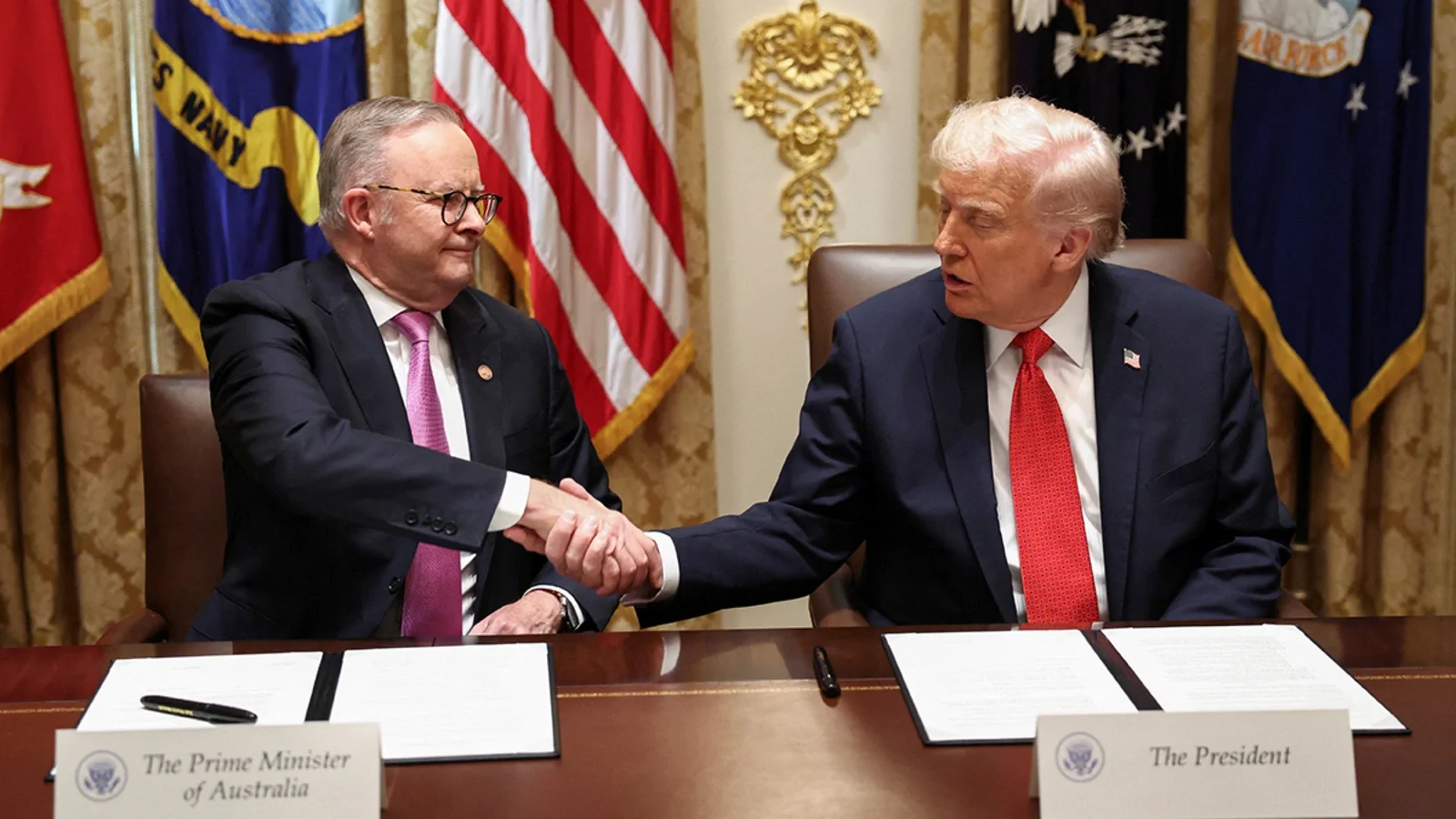
The economic relationship between Australia and the the United States is one of their most significant bilateral ties. In 2023, the total two-way trade in goods and services between the two economies reached about A$98.7 billion, with Australia exporting A$33.6 billion and importing A$65.1 billion. On the investment front, the US remains Australia’s largest foreign investor, with investment stock in Australia of approximately A$1.17 trillion in 2023, and Australia’s investment in the US at around A$1.20 trillion. Since the Australia–US Free Trade Agreement (AUSFTA) came into effect in 2005, bilateral goods and services trade has more than doubled and two-way investment has more than tripled. This article examines the formal frameworks, trade dynamics, and investment flows underpinning that relationship.
Agreements and Frameworks
The principal formal instrument anchoring the Australia–US economic relationship is the Australia–United States Free Trade Agreement (AUSFTA), which entered into force on 1 January 2005. AUSFTA provides for tariff liberalisation, rules of origin, services market access, intellectual property protections, government procurement rules, and disciplines on non-tariff measures. A notable feature is that despite liberalising many sectors, the agreement preserves Australia’s ability to screen foreign investment: there is no investor–state dispute settlement (ISDS) provision, and Australia maintains its foreign investment rules and reservation lists (for example in media, telecommunications, transport, and sectors exceeding certain investment thresholds). Reserved sectors include stakes in media, telecommunications, defence, and large investments above A$800 million in certain other industries. Under AUSFTA, the two parties also established a Joint Committee to supervise implementation and review the trade relationship.
In addition to AUSFTA, Australia and the US cooperate in multiple multilateral and plurilateral forums. They are both members of the World Trade Organization (WTO) and the Organisation for Economic Co-operation and Development (OECD). Australia engages with the US via APEC (Asia-Pacific Economic Cooperation), and both participate in frameworks like the Indo-Pacific Economic Framework (IPEF) and in trade dialogues such as ITAG (Industrial Technology and Access Group).The bilateral relationship is further structured via AUSMIN, the Australia–United States Ministerial Consultations on foreign and defence policy, which helps align strategic and economic priorities.
In sum, AUSFTA provides the central legal basis for liberalisation and protection, while multilateral relationships and ministerial forums serve as arenas for coordination, dispute resolution, and future reform.
Trade
Two-Way Trade Balance
In 2024, the US was Australia's 2nd largest trade partner in terms of two-way trade, while Australia ranked as the US's 18th largest trade partner. Historically, Australia has run a trade deficit with the United States in goods and services. In 2023, Australian exports of A$33.6 billion were offset by imports of A$65.1 billion, yielding a substantial deficit. In 2024, Australia’s goods and services exports to the US reached A$36.1 billion. That pattern continues to indicate a net import position from the US.
While goods trade dominates the bilateral flows by volume, services trade is increasingly salient. The services trade relationship includes intellectual property, digital, financial, legal, and business services. Australia typically runs a smaller surplus in services exports (e.g. business services) to the US compared to the substantial deficits in goods imports. The net effect is that overall trade remains in deficit from Australia’s side. The stronger growth in services trade under liberalised rules is an area of ongoing expansion, particularly in professional, legal, and digital sectors.
Exports to the United States
Goods exports from Australia to the US are led by beef and other foodstuffs, gold, and pharmaceutical products (excluding medicaments). For instance, beef accounted for A$4.4 billion in exports, gold for A$2.9 billion, and pharmaceutical products around A$1.9 billion in the relevant year.
Services exports also make a meaningful contribution, particularly professional and technical business services, which contributed about A$5.6 billion in recent estimates. Australia’s export structure reflects comparative advantage in resource and agricultural goods, while service exports leverage skilled labour, institutional linkages, and legal/financial interoperability. Agricultural exports to the US are relatively constrained by US domestic support, sanitary and phytosanitary standards, and historical safeguard or quota arrangements (for beef, sugar, textiles) under AUSFTA and in US agricultural policy.
Imports from the United States
On the import side, Australia sources a wide range of manufactured goods and services from the US. These include aerospace and defence equipment, medical devices and high-technology equipment, machinery, pharmaceuticals and chemicals, and financial, insurance, and digital services.
The liberal market access provisions under AUSFTA (for electronics, machinery, IT, and professional services) have expanded the ability of Australian firms to import US inputs. The US’s strength in innovation and advanced manufacturing complements Australian demand for capital goods, R&D‐intensive inputs, and high-end services.
Investment
In terms of investment, the United States is Australia’s most significant investor and the principal destination for Australian outbound investment. In 2023, US investment stock in Australia was approximately A$1.17 trillion, while Australia’s investment stock in the US was about A$1.20 trillion. Since AUSFTA’s implementation, two-way investment stock has more than tripled, illustrating a robust deepening of cross-border capital flows.
The trend in annual flows varies with global and sectoral conditions, but major trends include continued high flows into mining, financial services, manufacturing, and information & communication technology sectors. Within Australia, foreign direct investment from the US is concentrated in mining and quarrying, financial and insurance activities, manufacturing, and real estate. The mining sector remains especially prominent: Australian reserves and extraction operations attract technology, capital, and corporate participation from US firms seeking access to minerals critical for energy transition (e.g. lithium, rare earths).
Australian investment into the US has likewise been concentrated in financial services, real estate, and innovative technology sectors. As of end 2024, Australian investments abroad totalled A$4.3 trillion, with the United States being the largest destination: Australian investment in the US reached approximately A$1.55 trillion. The growth in Australian outbound investment may reflect global diversification strategies of sovereign funds, large institutional investors, and corporate expansion into high-value US markets.
Notable company examples include Australian firms in health tech or fintech establishing US operations, and US mining or energy firms acquiring Australian resource assets. The investment relationship is underpinned by regulatory stability, rule of law, institutional compatibility, and confidence in governance frameworks in both countries.
The Australia–United States trading and investment relationship is robust, evolving, and underpinned by formal legal frameworks and institutional cooperation. While Australia typically runs a trade deficit with the US, significant exports in agriculture, gold, and services demonstrate areas of strength. On the investment front, the bilateral stocks exceed a trillion dollars, with expanding flows that reflect sectoral complementarities and mutual confidence. The AUSFTA remains central to the economic architecture, reinforced by multilateral cooperation in the WTO, OECD, APEC, and emerging frameworks like IPEF.
For further information, readers should consult the United States Studies Centre’s analysis AUSFTA at 20: The past, present and future of the US–Australia trade and investment relationship, the Perth USAsia Centre’s report Trumping Trade: Aus–US Economic Relationship, and the Australian Bureau of Statistics article Australia’s trade with the United States of America.