ARTICLE
China
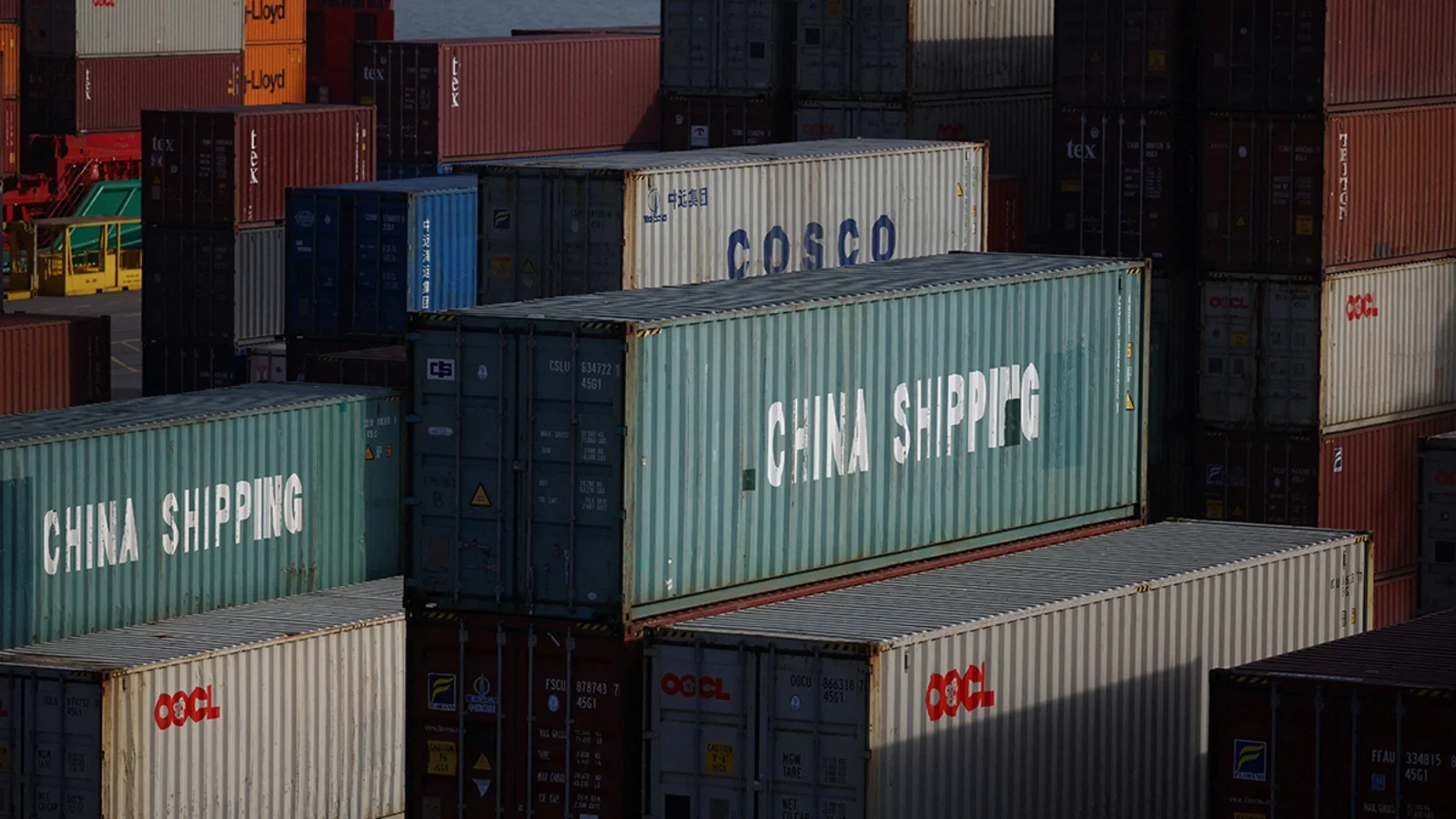
Australia’s economic relationship with China is its most significant globally, underpinned by large and complementary trade flows. China has been Australia’s largest two-way trading partner since 2009, accounting for around 26 per cent of total trade in 2023–24, valued at A$325 billion. Exports to China reached A$196 billion, while imports from China totalled A$116 billion, giving Australia a substantial trade surplus. China is also a key, though smaller, investment partner. In 2024, the stock of Chinese investment in Australia was A$73 billion, and Australian investment in China stood at A$58 billion. Together, these figures highlight the central role of the bilateral relationship in Australia’s economic prosperity.
Agreements and Frameworks
The foundation of the relationship is the China–Australia Free Trade Agreement (ChAFTA), which entered into force in 2015. The agreement eliminated or reduced tariffs on most goods and opened new access for Australian services. By full implementation, 98 per cent of Australian exports to China entered tariff-free, including beef, dairy, wine, seafood, and resources. Australia also removed nearly all tariffs on Chinese manufactured goods such as electronics and machinery. ChAFTA improved investor protections and raised the threshold for Chinese private investments requiring screening to over A$1 billion, encouraging greater capital flows. It also contains a most-favoured-nation clause for services, ensuring future liberalisations granted to others extend to Australia.
Beyond ChAFTA, both countries participate in broader regional and global frameworks that shape their economic engagement. Australia and China are members of the Regional Comprehensive Economic Partnership (RCEP), the World Trade Organization (WTO), G20, and APEC, which support regional integration and global trade norms. A Comprehensive Strategic Partnership, established in 2014, further institutionalises high-level economic dialogue between the two governments.
Trade
Two-Way Trade Balance
Australia runs a consistent trade surplus with China. In 2023–24, exports to China were worth A$196 billion, nearly double those to Japan, while imports were A$116 billion. China accounts for almost one-third of Australia’s total exports, reflecting deep resource and consumer linkages.
Exports
Australian exports to China are dominated by resources and energy, led by iron ore, coal, and liquefied natural gas. Iron ore alone remains Australia’s largest single export, meeting more than half of China’s demand for steelmaking materials. Agricultural exports are also significant, including beef, wool, barley, and dairy. These products benefited directly from ChAFTA tariff reductions.
In recent years, trade restrictions introduced by China on several Australian goods affected up to A$20 billion in exports. By late 2024, most of these measures, covering wine, barley, beef, and lobster, had been lifted, contributing to a rebound in agricultural trade. Services exports have also recovered strongly since the pandemic, led by education and tourism. In 2023, services exports to China exceeded A$16 billion, driven by the return of Chinese students and visitors.
Imports
China is Australia’s largest source of imports, supplying almost one-fifth of total imports in 2024. These are primarily manufactured goods such as electronics, telecommunications equipment, machinery, clothing, and furniture. The dominance of Chinese manufactured imports reflects global supply chains in which Australia exchanges raw materials and services for finished products. This complementary trade structure has made the relationship resilient, even during periods of political tension. Despite temporary disruptions, total two-way trade in 2023–24 remained near record levels, confirming the enduring importance of the economic partnership.
Investment
Chinese Investment in Australia
China remains a valued but relatively modest source of foreign investment for Australia. In 2024, the stock of Chinese investment was A$73 billion, making it the 13th largest investor. Foreign direct investment (FDI) accounts for about two-thirds of this amount, concentrated in mining, energy, real estate, and infrastructure. Chinese firms have invested heavily in resource projects and property, including stakes in mining operations across Western Australia. However, annual inflows have declined sharply from peaks above A$10 billion in 2016 to around A$1–2 billion in recent years, reflecting tighter Chinese capital controls and increased Australian screening of sensitive sectors. In 2024, roughly 80 per cent of Chinese investment targeted mining projects, highlighting continued interest in resource security.
Australian Investment in China
Australia’s investment presence in China is smaller but growing gradually. In 2024, Australian investment stock in China totalled A$58 billion, with only about A$2 billion in direct investment. Australian companies are active mainly in financial services, resources, and advanced manufacturing. Banks such as ANZ and firms like Macquarie have established operations to serve Chinese clients, while manufacturers including BlueScope maintain production facilities in China. Opportunities in education and healthcare are also expanding as China opens its service sectors. Outbound investment dipped during recent years of diplomatic tension but has stabilised as economic ties normalised in 2024.
Together, these flows demonstrate a maturing investment relationship, though still modest compared with the scale of trade. Both governments continue to signal support for transparent and stable investment conditions through frameworks such as ChAFTA and regular bilateral dialogues.
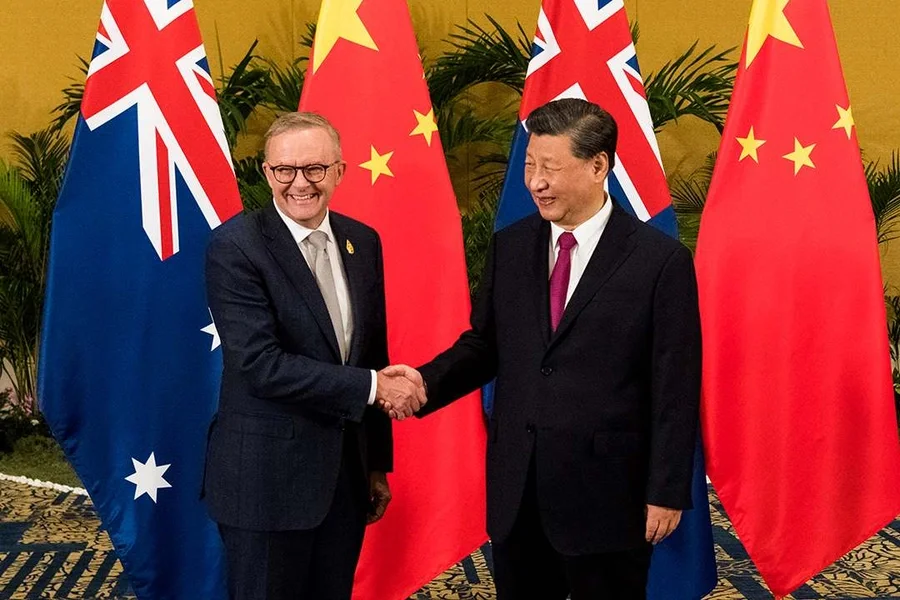
Australia’s economic relationship with China remains its largest and most consequential. The partnership is built on complementary strengths; Australia’s abundance of natural resources and high-quality services, and China’s manufacturing capacity and vast market. While trade dominates the relationship, investment ties continue to broaden across sectors. The implementation of ChAFTA, participation in RCEP, and improved diplomatic engagement have reinforced a stable foundation for future cooperation. As trade barriers ease and economic conditions improve, both nations are positioned to sustain a pragmatic and mutually beneficial relationship.
For up-to-date statistics and analysis, readers can refer to the Department of Foreign Affairs and Trade’s China Country Brief, reports by the Australia–China Relations Institute (UTS ACRI) and KPMG’s Demystifying Chinese Investment in Australia series. These resources provide further detail on the evolving dynamics of Australia–China trade and investment.